
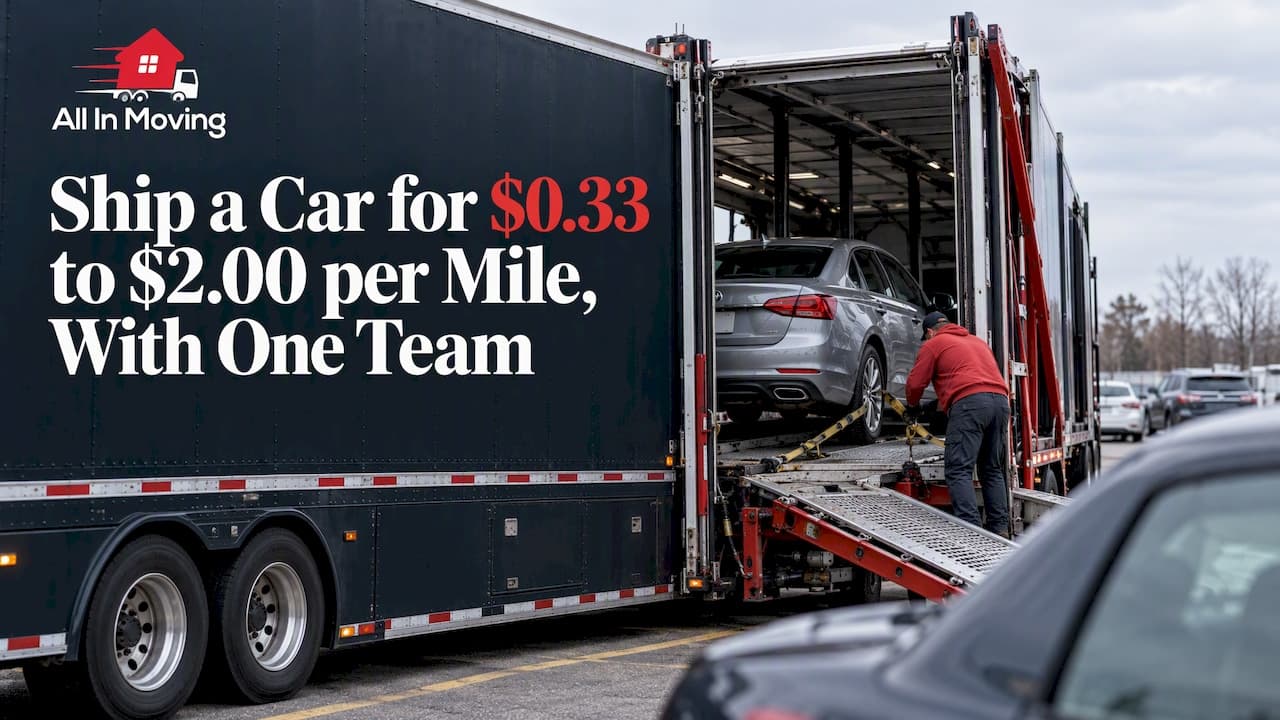
Shipping a car typically runs between $0.33 and $2.00 per mile, with open transport covering most vehicles and enclosed transport reserved for high-value cars. Before booking, verify the carrier's DOT/MC registration and request a binding estimate so the quoted price matches what you actually pay.
TL;DR:
- Open transport handles around 90% of shipments; choose enclosed service for high value, classic, or fragile cars, though it costs more.
- Verify active DOT and MC registration, insurance limits, complaint records, and written pickup and delivery windows before booking, especially when using a broker.
- Flexible pickup dates can reduce prices, while door to door service may require a nearby meeting point when streets are narrow or clearance is low.
- For international vessel or air exports, present the vehicle and original title to U.S. Customs at least 72 hours before departure.
- Photograph the clean car from every angle, remove valuables, and check that the Bill of Lading records the correct VIN, mileage, and existing damage.
Table of Contents
- Typical costs: per-mile ranges and example route totals
- Transport types: open vs. enclosed, door-to-door vs. terminal, non-running vehicles
- How to choose a shipper: one checklist to verify credentials, quotes, and red flags
- Preparing the car for pickup: step-by-step inspection and loading checklist
- International shipping essentials: CBP export requirements and document checklist
- Timelines and tracking: pickup windows, transit times, and tracking options
- Why a direct-service mover matters for your vehicle shipment
- Get a binding estimate from a dedicated moving team
- FAQ
- Sources
Typical costs: per-mile ranges and example route totals
Car shipping prices scale with distance, but not in a straight line. Short hauls cost more per mile because loading, fuel, and driver time get spread over fewer miles, while long hauls bring the per-mile rate down.
Industry pricing data puts the typical range at $0.33 to $2.00 per mile, depending on vehicle size, route, and transport type. A few example scenarios help illustrate typical costs, with shorter trips generally costing more per mile and longer cross-country shipments totaling several hundred to over a thousand dollars.

Open transport remains the standard choice for around 90% of vehicle shipments, according to Consumer Reports, which keeps costs lower for most car owners.
Vehicle size moves the price too. A compact sedan costs less to ship than a full-size SUV or pickup truck, since larger vehicles take up more space on a multi-car trailer and add weight. Carrier type matters as well: a direct carrier that owns its trucks often charges more than a broker-arranged shipment, but it usually comes with tighter scheduling control and more direct communication.
Transport types: open vs. enclosed, door-to-door vs. terminal, non-running vehicles
Choosing the right transport method comes down to your car's value, your budget, and how much handling risk you're willing to accept.
- Open transport carries vehicles on an uncovered multi-car trailer, exposing them to weather and road debris. It's the cheaper option and works well for everyday sedans, SUVs, and trucks.
- Enclosed transport uses a covered trailer that shields the vehicle from weather and flying debris. Consumer Reports recommends it for high-value, classic, or fragile vehicles, and it typically carries a noticeable premium over open transport.
- Door-to-door delivery means the carrier picks up and drops off as close to your addresses as road access allows. It's the most convenient option but can run into last-mile issues on narrow streets or in areas with low-clearance obstacles, sometimes requiring a meeting point nearby.
- Terminal-to-terminal shipping has you drop off and pick up the vehicle at a depot. It can lower cost in some cases but adds extra driving and coordination on your end.
- Non-running vehicles require a winch or forklift to load, since they can't be driven onto the trailer under their own power. This extra labor and equipment typically adds to the base price, and not every carrier is equipped to handle it, so flag this detail when requesting quotes.
How to choose a shipper: one checklist to verify credentials, quotes, and red flags
Picking the right shipper matters more than shaving a few dollars off the quote. A handful of checks separate a reliable carrier from a costly mistake.
- Look up the carrier's DOT and MC numbers on the FMCSA registration search before booking any interstate shipment, and confirm the registration is active.
- Check the carrier's insurance coverage and ask for specific limits, since standard cargo insurance can fall short for collector or high-value vehicles.
- Review complaint history through the FMCSA's public records to spot patterns of late pickups, damage disputes, or unresolved claims.
- Insist on a binding estimate that lists the total price upfront rather than a non-binding quote that can balloon after pickup.
- Get the pickup and delivery window in writing, along with line-item pricing that separates base transport from fuel surcharges or expedited fees.
- Decide between a broker and a direct carrier. Brokers arrange capacity across a network of carriers and can be useful for finding availability, but a direct-service mover that handles the entire job with one team removes the extra handoff point and the uncertainty of not knowing which carrier shows up.
- Watch for red flags: demands for wire-only payment, contracts with blank fields, or quotes far below the typical per-mile range, which often signal a bait-and-switch pricing tactic once your car is already loaded.
The FTC warns against exactly this pattern, advising consumers to avoid large upfront wire transfers and to confirm DOT registration before handing over a vehicle or household goods.
Pro Tip: Photograph the carrier's truck, license plate, and DOT number at pickup, not just your vehicle. It gives you a paper trail if a dispute comes up later.
Preparing the car for pickup: step-by-step inspection and loading checklist
A little prep work before the truck arrives protects you if damage happens in transit.
- Wash the car thoroughly so existing scratches, dents, and paint chips show up clearly in photos. Consumer Reports notes that clean surfaces make pre-existing damage far easier to document.
- Photograph the vehicle from all angles, including close-ups of any current damage, before the driver arrives.
- Remove personal items, toll tags, and valuables. Most carriers won't cover loose belongings, and some prohibit them entirely for weight and liability reasons.
- Review the Bill of Lading carefully before signing. Confirm the VIN, odometer reading, and damage notes match what you observed, since this document is your primary reference if you need to file a claim.
- Check the battery charge and tire pressure. A non-running vehicle needs advance notice to the carrier so the right loading equipment is on site.
A notable share of shipments involve non-running or inoperable vehicles, which require special loading equipment and should be flagged when requesting your quote.
International shipping essentials: CBP export requirements and document checklist
Shipping a car out of the United States involves federal documentation that has nothing to do with domestic moves, and missing a step can delay your vehicle at the port.
- Present the original title or Manufacturer's Statement of Origin (MSO) along with the VIN or PIN to U.S. Customs and Border Protection before export.
- Meet the 72-hour rule: for exports by vessel or air, both the vehicle and its documentation must be presented to CBP at least 72 hours before departure.
- Foreign-titled vehicles need original proof of ownership, and documents not in English typically require certified translations or certified copies.
- Vehicles imported into the United States may need EPA and DOT clearance, including EPA Form 3520-1 and DOT Form HS-7. Vehicles that don't meet U.S. standards sometimes require modification through an independent commercial importer before they can legally enter the country.
- Coordinate paperwork with your mover well ahead of pickup. International shipments involve more steps than domestic ones, and sorting out titles, translations, and customs forms early avoids delays at the port.
Our international moving services include customs clearance handling as part of the relocation, which removes much of this coordination burden from your plate.
Timelines and tracking: pickup windows, transit times, and tracking options
Transport companies typically quote a pickup window rather than an exact date, since routes depend on how many vehicles a carrier can line up along the way.
- Short routes often have pickup windows of a few days and delivery within a day or two of loading.
- Cross-country routes can involve pickup windows of several days to a week, with transit taking anywhere from a few days to over a week depending on how many stops the carrier makes.
- Tracking options vary by carrier. Some provide GPS-based tracking through their own systems, while others rely on phone updates. A consumer tracking device like an AirTag can supplement carrier updates, though it depends on cellular or Bluetooth range and isn't a substitute for the carrier's own tracking.
- Flexible pickup dates can lower your price. Carriers often give a discount for a wider pickup window since it's easier to fit your vehicle into an existing route.
- Delays happen due to weather, mechanical issues, or route changes when a carrier adds or drops vehicles along the way. Building a few days of buffer into your schedule for time-sensitive deliveries helps avoid headaches.
If your car needs to sit somewhere temporarily before the rest of your move is ready, it's worth understanding storage-in-transit options so a scheduling gap doesn't turn into an unexpected cost.
Why a direct-service mover matters for your vehicle shipment

The auto transport industry runs largely on brokers, and that model works fine for plenty of shippers. But a broker introduces a layer between you and the person actually driving your car, and that layer is where miscommunication tends to creep in.
We have extensive experience handling long-distance and international relocations without relying on brokers or subcontractors. One dedicated team manages your vehicle and household goods from start to finish, avoiding handoffs and uncertainty about who will arrive on pickup day. Our binding estimates reflect the actual cost, and our customer reviews speak to the kind of attentive service that comes from one team staying accountable for the whole job.
— Sami
Get a binding estimate from a dedicated moving team
If you're relocating and need your vehicle shipped alongside household goods, we offer long-distance, commercial, and international moves managed by one team without brokers or handoffs and provide binding estimates matching the final bill.

Our international moving services include customs clearance support for vehicles crossing borders, and our residential and commercial moving page is the place to start if you want a transparent, single-team quote for your next relocation.
FAQ
How much does it normally cost to ship a car?
Most car shipments cost between $0.33 and $2.00 per mile, with short routes under 500 miles often totaling $200 to $500 and cross-country routes running several hundred dollars to over $1,000. The exact price depends on distance, vehicle size, and whether you choose open or enclosed transport.
What is the $3000 rule for cars?
This isn't a standard industry or regulatory term, and no authoritative source defines a universal "$3000 rule" for car shipping. If you've seen this phrase in a specific context, it likely refers to a particular company's pricing threshold rather than an industry-wide standard.
How much will it cost to ship a car from the USA?
Shipping a car internationally from the United States involves ocean freight, customs documentation, and export clearance in addition to standard transport costs, so the total varies widely by destination and vehicle. Our international moving services include customs clearance handling, and pricing is provided through a binding estimate based on your specific route and vehicle.
What is the cheapest way to haul a car?
Open transport is the lowest-cost option for most vehicles, covering around 90% of shipments industry-wide, and choosing flexible pickup dates instead of a fixed date can lower the price further. Terminal-to-terminal delivery can also reduce cost compared to door-to-door, though it adds extra driving on your end.
Sources
- Exporting a motor vehicle | U.S. Customs and Border Protection
- How to Ship or Transport a Car - Consumer Reports
- Avoid scams when you hire a moving company | FTC