
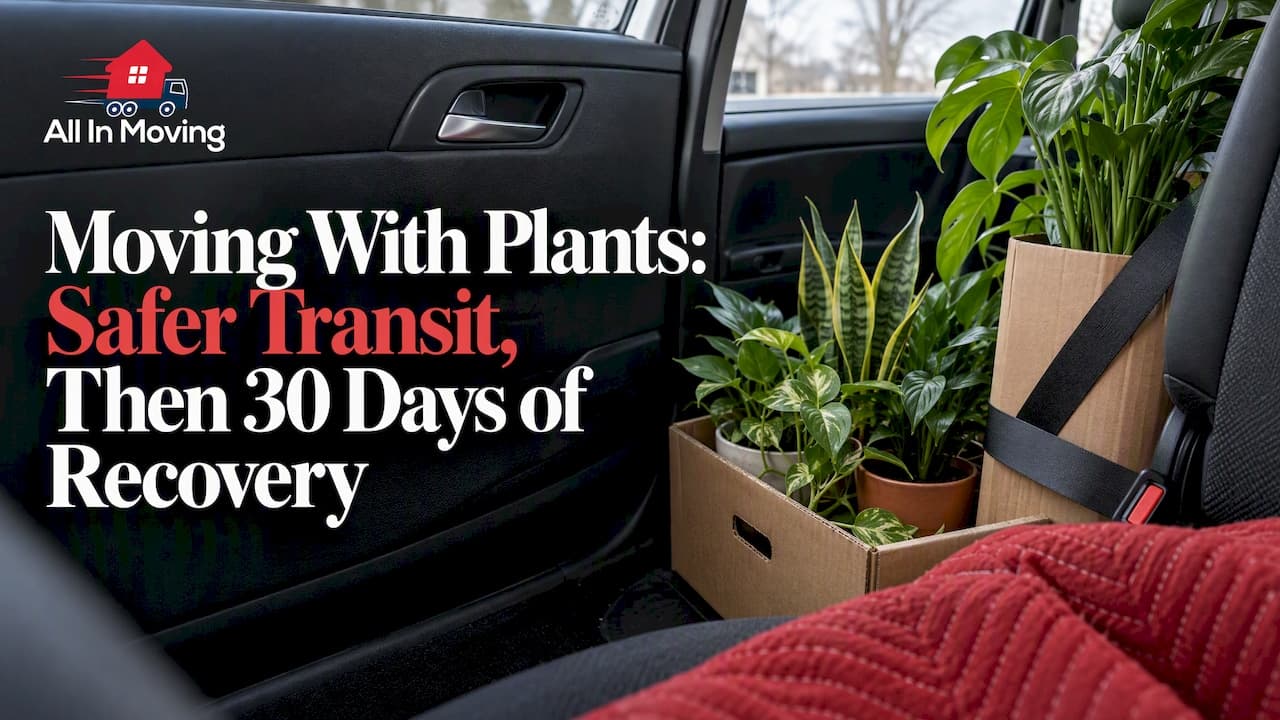
Drive small, valuable plants yourself whenever your route allows it, stabilize and stage larger specimens for the moving truck, and bring in a dedicated mover for complex long-distance or international collections. Hydrate plants a day or two before departure, anchor every pot so it cannot tip, and shield leaves from both freezing air and trapped heat. The sections below walk through each decision and technique in order.
TL;DR:
- Evaluate each plant’s replacement value and size; take cuttings from bulky or replaceable specimens when the full plant cannot travel safely.
- Check destination agriculture authorities before packing: some regions restrict species, while international entry often requires phytosanitary certificates, soil removal, or permits.
- When repotting is necessary, do it two to three weeks before departure and choose a lightweight nursery pot; inspect leaves and stems for pests.
- For truck trips, place plants near the rear door, leave airflow around them, and avoid overnight storage in a hot, dark trailer.
- After arrival, unpack plants first and provide bright, indirect light; delay fertilizer and repotting for about 30 days while they acclimate.
Table of Contents
- How to Decide Which Plants Are Worth Moving
- Preparing Plants Before the Move: Timing, Watering, and Pot Choices
- Transport Mode Guidance and Packing Techniques for Every Method
- Protecting Plants From Temperature and Weather During Transit
- Staging and Short-Term Storage for Move Day and En Route
- Acclimating and Recovering Plants After the Move
- Legal Requirements and Permits for Crossing State or International Borders
- Quarantine Regulations and Inspections During International Moves
- Choosing Containers and Soil That Hold Up in Transit
- Balancing Emotional Value With Practical Choices
- How All In Moving Handles Plant Transport on a Long-Distance Move
- FAQ
- Sources
How to Decide Which Plants Are Worth Moving
Not every plant survives the trip, and not every plant should. Start by weighing sentimental or financial value against how easily it could be replaced: a rare variegated monstera deserves the effort a grocery-store pothos does not. Size matters just as much as attachment. A six-foot fiddle leaf fig that barely clears your ceiling at home may not survive a truck ride wedged between boxes, and it may not fit through the new doorway either.
Check destination rules before you commit to anything. Some states and countries restrict specific species, require inspection certificates, or ban soil entirely, so a plant that seems easy to move can become a logistical dead end. When a full specimen looks too risky or too large, consider taking cuttings or young divisions instead. A pothos vine, a succulent offset, or a rooted herb cutting travels far better than its parent plant and reestablishes quickly.
A short checklist helps you decide fast:
- Is this plant rare, expensive, or meaningfully sentimental, or could you easily replace it?
- Will it physically fit in your vehicle, truck, or shipping container without damage?
- Does your destination state or country restrict or inspect this species?
- Would a cutting or division survive the trip better than the full plant?
- Do you have the time and attention to care for it during transit, or is it better gifted or propagated and left behind?
Preparing Plants Before the Move: Timing, Watering, and Pot Choices
Give yourself two to three weeks of lead time so prep does not turn into a last-minute scramble.
- Avoid repotting right before the move. Fresh soil and a new container add transplant shock on top of travel stress, so repot at least two to three weeks ahead if a plant truly needs a larger pot or fresh soil.
- Water lightly one to two days before transit, not the morning of. Soil that is merely moist travels better than soil that is soaked, since waterlogged root balls shift weight, leak, and invite rot inside a closed truck.
- Inspect leaves and stems for pests before you pack anything. Treat scale, spider mites, or mealybugs now so you are not transporting an infestation into your new home.
- Stabilize every pot before loading. Nest plastic pots inside slightly larger ones, or wedge pots into sturdy boxes with crumpled paper around the base, since university extension guidance recommends lifting and securing by the root ball rather than the stem to prevent mechanical damage.
- Swap heavy ceramic containers for lightweight nursery pots where you can. The ceramic pot can travel separately, wrapped and cushioned, while the plant rides in something that will not crack if it tips.
- Prune back leggy growth, stake top-heavy stems, and loosely tie up trailing foliage like pothos or string of pearls so vines cannot snap or tangle during loading.
Pro Tip: Tape a bamboo stake to the inside of the pot rim, then loosely loop twine around tall or floppy stems. This keeps foliage from flopping into the aisle without constricting growth.
Transport Mode Guidance and Packing Techniques for Every Method
Your transport choice shapes almost everything else about plant prep, so pick the mode before you finalize packing materials.
Driving in a personal car works best for small to medium plants you can keep within reach. Load pots last so they sit on top of boxes rather than underneath them, use a low cardboard box or plastic crate to keep several pots upright and from sliding, and loop a seat belt loosely around taller boxes on the seat. Skip parking in direct sun with the windows closed, since a closed car can overheat in minutes even on a mild day.
Moving trucks demand more bracing. Place plants on the truck's floor near the back door where you can reach them for checks, never underneath heavier boxes, and leave a gap for airflow rather than sealing them against the wall. Pad pot rims with towels or packing paper so neighboring boxes cannot crush stems, and brace tall plants against a wall using rolled blankets rather than letting them lean on furniture.
Flying with plants means checking airline policy well before your trip, since rules vary by carrier and by whether a plant travels as a carry-on or checked item. Long-distance movers who have tested this route found that small plants often fit in a vented carry-on container, while larger specimens usually need ground shipping or a dedicated carrier, according to one cross-country moving account. International flights add documentation requirements, covered in more detail below.
Shipping plants through a specialist carrier makes sense for valuable specimens you cannot drive or fly with yourself. Build in realistic time for delays: research on delayed vegetative shipments found that extended transit time increases leaf senescence and disease risk in cuttings, so label boxes with "live plant, this side up" and handling notes, and plan for immediate rehydration on arrival.

Across every mode, the same pack-out kit covers you: sturdy boxes or crates, packing paper or towels for cushioning (not plastic wrap, which traps moisture), twine or soft plant ties, a spray bottle for light misting, and labels marking fragile or top-heavy items.
Protecting Plants From Temperature and Weather During Transit
Temperature swings cause more plant losses than rough handling does. University extension research notes that plants are often weakened by exposure to temperature extremes, desiccating winds, or reflected heat during transport and staging, well before they reach their destination.
In cold weather:
- Wrap pots in insulated boxes or packing blankets for any trip below freezing.
- Use commercial heat packs only if wrapped in several layers of newspaper, never placed directly against foliage, since direct contact can scorch leaves.
- Time loading and unloading for the warmest part of the day to minimize cold exposure.
In hot weather:
- Keep plants shaded and never leave them in a closed vehicle parked in direct sun.
- Crack a window or run the air conditioning if plants ride with you in the car.
- Group pots loosely rather than tightly packed, so air can circulate around leaves.
If a delay leaves plants exposed to extreme heat or cold longer than planned, check soil moisture and leaf firmness as soon as you can reach them, and move affected plants to a stable indoor temperature before deciding whether to prune damaged growth.
Pro Tip: Keep a spray bottle of water in the cab with you. A light misting after a hot or dry stretch helps wilted leaves recover faster than waiting until you reach your destination.
Staging and Short-Term Storage for Move Day and En Route
Overnight stops and loading breaks are where plants quietly suffer the most, often from being forgotten in a hot truck or a dark corner.
- Place plants in a shaded, wind-protected spot during any hold, never on hot asphalt or a sun-baked dashboard.
- Check soil moisture and mist leaves lightly during longer staging stops, since a few hours in a warm vehicle dries out foliage faster than you would expect.
- Avoid stacking boxes on top of plants, even briefly, since crushed stems and bruised leaves rarely recover fully.
- Skip prolonged storage in dark, hot spaces like a closed truck trailer, even overnight, and never let a root ball sit exposed to direct sun during a break.
If your move includes a planned storage-in-transit period, our guide to storage-in-transit costs walks through what that arrangement typically involves and what to ask about climate control for sensitive items.
Acclimating and Recovering Plants After the Move
The first 30 days after arrival matter more than the move itself for long-term plant health.
- Unpack plants first, before furniture, and check soil moisture, physical damage, and any new pests that may have hitched a ride.
- Set up a recovery zone with bright indirect light, stable room temperature, and higher humidity if your new climate is drier than your old one.
- Hold off on fertilizing or repotting for about 30 days, since research on stressed vegetative cuttings recommends a stable, humid recovery period before introducing new changes that could compound transit stress.
- Prune back any yellowed, crushed, or broken foliage once the plant has settled, rather than cutting immediately on arrival.
- Watch for ongoing decline over several weeks. Horticultural reporting on post-move plant health points to mismatched light and temperature at the destination, not the move itself, as the leading cause of lasting decline, so adjust placement before assuming a plant is failing. If a plant keeps deteriorating past that point, a local nursery or extension office can usually diagnose the issue faster than guesswork.
Legal Requirements and Permits for Crossing State or International Borders
Plant laws vary by jurisdiction, and the rules that matter most depend on where you are headed. Within many countries, certain states or regions restrict specific plants to prevent the spread of pests or invasive species, and agricultural inspection stations at some state lines can stop vehicles carrying soil-grown plants. Before a domestic move, check your destination state's department of agriculture website for any restricted or regulated plant lists, since citrus, certain succulents, and some aquatic plants are common targets.
International moves add another layer entirely. Most countries require a phytosanitary certificate, issued by an agricultural authority in your country of origin, confirming a plant is free of pests and disease before it can cross the border. Many destinations also ban soil outright, meaning a plant has to be bare-rooted and repotted in sterile, approved medium before it travels. Some species face outright import bans regardless of documentation, particularly ones considered invasive in the destination country.
The safest approach is to contact the receiving country's agricultural or customs authority directly, well before your move date, rather than relying on general guidance. Rules change, enforcement varies by port of entry, and the consequences of arriving without the right paperwork range from confiscation to fines. For moves that involve customs clearance alongside plant logistics, our international moving services page outlines how customs documentation gets handled for a relocation overall.
Quarantine Regulations and Inspections During International Moves
Quarantine inspections exist to stop pests and plant diseases from crossing borders, and they apply even to healthy-looking houseplants. On arrival, customs or agricultural officers may inspect soil, roots, and foliage for signs of insects, fungal disease, or soil-borne pathogens, and they have the authority to hold, treat, or destroy plants that do not meet entry requirements.
Soil is the most common sticking point. Many countries require plants to arrive bare-root, meaning all growing medium is removed and replaced with an approved sterile substrate, since soil can carry pests invisible to the eye. If you plan to ship rather than hand-carry plants internationally, build inspection time into your timeline, since customs holds can add days before a plant reaches you, during which it needs structural care rather than being left boxed.
Declare plants honestly on any customs form rather than hoping they go unnoticed. Undeclared plants that get flagged face confiscation and potential fines, and the process is slower and more stressful than declaring upfront and following the required steps. If your collection is large enough to need this handled by a dedicated team rather than solo research, our international moving services include customs clearance coordination as part of a relocation.
Choosing Containers and Soil That Hold Up in Transit
The container and soil a plant travels in matter almost as much as how carefully you pack it. Lightweight plastic nursery pots are the most forgiving transport vessel: they flex slightly on impact instead of cracking, weigh far less than ceramic or terra cotta, and nest together for compact loading. If a plant currently lives in a heavy decorative pot, consider repotting into a plastic nursery pot two to three weeks before the move, giving roots time to settle before travel stress hits, and shipping the decorative pot separately, wrapped and cushioned.

Soil choice affects how a plant handles vibration and temperature swings. A well-draining mix with perlite or bark holds its structure better during a bumpy ride than dense, moisture-heavy potting soil, which compacts and can slosh when wet. Avoid topping off with loose mulch or decorative stone for the trip, since loose material shifts and spills the moment a box tips.
For bare-root international shipments, an approved sterile medium replaces garden soil entirely, and roots should be lightly misted and wrapped in damp paper rather than left dry for an extended trip. Whatever container and soil combination you land on, make sure drainage holes stay clear and unblocked by packing material, since trapped moisture in transit is one of the fastest ways to lose a plant to rot before it ever reaches the new house.
Balancing Emotional Value With Practical Choices
Plants carry history, a cutting from a parent's garden, a fern that survived three apartments. That attachment is real, and it is also not a logistics plan. A collection of forty plants cannot all ride in a sedan, and pretending otherwise usually costs you several of them.
My rule of thumb: drive what you love most, propagate or gift what you can part with, and bring in professional movers once a collection gets large, the distance gets long, or the move crosses a border with real paperwork involved. Knowing your limits helps protect the plants that matter most.
— Sami
How All In Moving Handles Plant Transport on a Long-Distance Move
When a plant collection outgrows what fits in your car, professional movers can handle the rest as part of a long-distance or international move, with a dedicated team managing packing, logistics, and customs clearance from start to finish rather than handing your move between brokers and subcontractors.

Here is when it makes sense to bring us in:
- Your collection is too large or too fragile to drive yourself across state lines.
- Your move crosses an international border and needs customs documentation handled alongside the rest of your shipment.
- Winter or summer transit risk makes professional climate-aware packing worth the cost.
- You want a single point of contact instead of coordinating movers, shippers, and customs brokers separately.
Professional moving services often provide binding, transparent estimates so the full cost is known before move day arrives. Request a binding estimate for your move or get details on our international moving services if your plants are crossing a border with you.
FAQ
How do you relocate a plant without killing it?
Water lightly a day or two before the move, stabilize the pot so it cannot tip, and protect foliage from direct sun and freezing air during transit. Once you arrive, hold off on fertilizing or repotting for about 30 days and let the plant acclimate to its new light and humidity first.
Is moving stressful for plants?
Yes, moving stresses plants through temperature swings, handling, and changes in light once they arrive. Extension research notes that exposure to temperature extremes, drying wind, and reflected heat during transport commonly weakens plants and can cause problems that show up only after they settle in.
How do you pack plants for a moving truck?
Place pots on the truck floor near the back where you can check on them, never stacked under other boxes, and pad rims with towels or packing paper to prevent crushing. Leave space around plants for airflow and brace tall specimens with rolled blankets rather than letting them lean against furniture.
Do plants do better staying in one spot rather than being moved around a house?
Plants generally adjust better with fewer location changes, since each move means readjusting to new light and airflow. Horticultural guidance points to mismatched light and temperature as the main reason plants decline after a move, so once you find a good spot in a new home, give the plant time there before relocating it again.
Can movers legally transport houseplants across state or international lines?
Rules vary by destination: some states restrict specific species, and international moves typically require a phytosanitary certificate and often bare-root packing with no soil. Checking your destination's agricultural authority before the move, or working with a mover that coordinates customs clearance, avoids delays or confiscation at the border.
Sources
- Protection of plants during transport and staging (UNL extension EC1276)
- How to move your houseplants long-distance (Los Angeles Times)
- Stuck in transit: delayed shipments can stress vegetative cuttings (MSU Extension)
- How to move houseplants (Sunset)